Garden

Learn the best Home and Garden tips and tricks to help make your home and outdoor living spaces a wonderful place to live. We share the best reviews, explanations, opinions and prices on home improvement, lawn care, garden care, appliances, and more.

Bees & Beekeeping

10 Things I've Learned my 1st Month as a Beekeeper!


I have been an official beekeeper for one month and now have two hives going! There is a lot to learn! Even though I’ve only had my bees for one month, I have some great tips and advice for the beginning beekeeper! Learn from and with me on this crazy journey called beekeeping!


Backyard Beekeeping
Backyard Beekeeping


Support our channel and start your homestead journey with us.

Backyard Beekeeping Tips

Thanks for checking out our channel and hopefully subscribing! We are a family who lives in the mountains of North Carolina, and our channel is family-friendly and features homesteading, horsemanship, chickens, goats, wilderness survival, travel, nature, salamanders, crafts, canning, gardens, fruit trees, dogs, cats, hiking, family adventures, science, and a whole bunch more! We post several videos weekly, so if you like us, subscribe! Any ideas for videos? Questions? Let us know!


source

Off Grid Garden
Green Life LivingHomesteadingUrban Farming

The Off-Grid Garden: A Complete Guide to Creating a Sustainable Garden for the Home

Off-Grid Garden
Off-Grid Garden

Image Source: Unsplash‍

You might think of a garden as having little to do with being off-grid, but the opposite is true. In fact, an off-grid garden will be invaluable in making your home more self-sufficient and independent, reducing your reliance on outside resources for water and food. A traditional on-grid garden is far from self-sufficient and independent. Rather than simply grow potatoes in your backyard or plant a few herbs on your windowsill, an off-grid garden is fully integrated with the needs of the home to ensure that nothing is wasted. Instead of throwing away excess compost or buying soil every year, you’ll have a small ecosystem that utilizes everything and produces what you need.

What is an Off-Grid Garden?

An off-grid garden is one that is not connected to the city’s water or power grid. Instead, it’s designed to rely solely on its own resources for water and power. If you’re planning to go off-grid, you’ll need to choose plants that are low-maintenance and can survive without artificial irrigation or electricity. If you’re going off-grid, you might find that having a garden can be even more important than usual. That’s because you won’t have access to store-bought produce, so you’ll need to grow your own to ensure that you’re getting enough vitamins and minerals in your diet. That’s why an off-grid garden is a great idea if you want to be as self-sufficient as possible.

The Importance of Producing Your Own Food and Water

There are plenty of reasons to grow your own food and collect water from your roof instead of buying it from a store. For one, it will save you a lot of money. Producing your own food and water will also reduce your carbon footprint by cutting down on the amount of energy you use and the amount of pollution you create. It can even help you prepare for the future since it will make it easier to live through an emergency situation or natural disaster. When you grow your own food, you can choose exactly which vegetables to plant and how much of each one to grow. That means no pesticides, chemicals, genetically modified organisms, or GMOs. You’ll also be able to eat healthier because you can control what goes into your food. With water, you can collect rainwater or run water from your roof through a filtration system to remove impurities. That way, you won’t have to rely on store-bought water that might be contaminated.

The Key Benefits of an Off-Grid Garden

– Improved food security – If you have an off-grid garden, you won’t have to worry about a lack of food as long as you’ve done your job properly. You’ll have plenty to eat even if there’s a disaster or you lose power. – Increased productivity – An off-grid garden can produce more food than a traditional on-grid garden because it can take better advantage of natural resources, like the sun and rain. – Reduced reliance on pesticides – When you grow your own vegetables, you don’t have to use pesticides. – More nutritious food – In addition to not using pesticides, you’ll also be able to grow heirloom and organic vegetables, which are healthier than their genetically modified counterparts. – Self-reliance – Growing your own food and water on an off-grid scale will help you be self-reliant.

Identifying the Space for Your Off-Grid Garden

Before you start designing an off-grid garden, you’ll need to find the ideal space for it. The first thing you’ll want to do is assess the amount of space you have. You’ll need a large plot of land for an off-grid garden since food production will require a lot of open space. Your garden should be located as close to your house as possible, since carrying vegetables from further away will be time-consuming. You’ll also want to pay attention to your soil quality. Ideally, your off-grid garden should be located in soil that is rich in nutrients, like compost or manure. You can test your soil to see if it has the right pH level, which will indicate if it has enough minerals and nutrients. If not, you can add compost to enrich it.

Creating an Off-Grid Plan for Your Garden

Once you’ve chosen a plot of land, you’ll need to design your off-grid garden. Start by drawing a diagram of your garden and noting which plants will be located in which spots. Be sure to account for pathways, fencing, and any other structures that will be in your garden. Next, decide where you’ll be collecting water and how it will be stored. You may want to collect rainwater from your roof and run it through a filtration system, or you might want to use a water storage tank. Finally, determine what type of soil you’ll be working with. You can collect soil samples from different parts of your plot to test them for pH levels. Once you know what kind of soil you have, you can use it to determine which plants will grow best there.

Selecting Plants for Your Off-Grid Garden

Now that you’ve determined where your garden will be located and how it will be designed, you can start selecting plants. Start by choosing vegetables that are easy to grow. Vegetables like lettuce, tomatoes, and beans are good beginner choices since they don’t have special growing requirements. You’ll also want to select vegetables that are best suited to your growing conditions. For example, if you have a lot of rain, you might want to plant vegetables that thrive in moist environments, like broccoli and lettuce. When you’re choosing the best vegetables for your off-grid garden, you should also consider the amount of space each one requires. For example, watermelons need a lot of space to grow, so you may want to avoid planting them if you’re growing in a small area.

Conclusion

An off-grid garden is a great way to create a self-sufficient home. It can produce enough food for your family and water for your household, so you can be as independent as possible. An off-grid garden can also help you save money, improve your health, and prepare for future emergencies. To create an effective off-grid garden, you’ll need to find the right plot of land and design a garden plan that includes the right plants.

Check out this great book on Homestead Gardening

If you are a beginning gardener this book is a must-have resource. It is well organized and contains easy-to-understand graphics. Plus the color pictures are inspirational as well as informative. I love having all of the information about different plants and how to care for them in one easy-to-read place. In the digital age that we live in, it is so easy to rely on the internet for advice but I love that I don’t have to search through videos or articles to find the answers I need. I couldn’t wait for this book to be released. I watch Gary from the Rusted Garden on YouTube and find his videos to be extremely helpful. His video series guided me to start a garden from seed. I have never had a successful garden until this year and when I look back and think I started it from seed…I am in awe.

Check out this great book on Homestead Gardening

Best Chicken Coop Plans
ChickensGreen Life LivingHow to BuildOff Grid

Chicken Coop Guide: What Size Chicken Coop Do I Need?

Building a Chicken Coop can be fun, but there are five key details you need to understand that will help you decide what size coop to build.


Chicken Coop Plans
Chicken Coop Plans – Adobe


Required Space: Determining how much space you need to build the chicken coop plays an important design objective. Some people have large farms with many acres available to build, and others can have just a small backyard behind their homes to raise them. With backyard chicken coops becoming increasingly popular, here are the size requirements you should consider for each chicken you plan to have.


Each chicken will need a minimum of 3 to 4 square feet of space in the chicken coop and 10 square feet in the run area of the coop.


To free-range your chickens, each chicken will require approximately 250 square feet of area to roam.


County or City Ordinances: Is it legal to have chickens on your property? Make sure you check with the city and or county laws and regulations because they may have certain restrictions or limitations specific to your area. You may find restrictions like the number of chickens permitted, roster regulations due to noise, distance limits to your neighbor’s property, height, or size limitations of the chicken coop. Some cities may not allow you to raise chickens, so please check before building.


Chicken Coop Plans
Chicken Coop Plans


Number of Chickens: We have determined that our city does allow us to raise chickens. Now that we know the space requirements per chicken, we can determine how many birds we can have. It is recommended that you raise at least three chickens. So we have decided we want four chickens. Most backyard owners have between 4 to 10 chickens. Always remember that the number you start with tends to get larger rather than smaller. The majority of people that have backyard Chickens enjoy the experience. So if you set everything up correctly initially, you should have the same positive experience.


Size of the Coop: Our chicken coop should be at least 12 to 16 square feet. The run should be 40 square feet. This would be a total of 52 to 56 square feet for four chickens. This would require an area of approximately 6′ X 10′. If you want more chickens, consider the space you have available and determine your size accordingly. If you are going to allow the chickens to be open range during the day, space will be a factor if you have backyard chickens.


Safety: Is your chicken coop run free from predators? Dogs, Raccoons, and other animals will dig under the fence to get to your chickens. You need to consider building the fence into the ground to avoid burrowing by predators. You could consider pouring a concrete foundation under the fence line. You will want at least 2 1/2 feet of clearance between the bottom of your coop and the ground. This has many advantages and can provide shade for your chickens during hot days.


Chicken coops come in all styles and sizes. You can build a simple square box-type house or have a stylish house with a fabulous architectural design. You also might want to consider a “Kit” instead of cutting your lumber.


If you are considering less than 4 to 6 chickens, a “kit” could be a reasonable option. To learn more about different Coop plans, click the link below.

Article Source

Backyard Grapes
Vertical GardensGardening

How to Grow Grapes – Backyard Grape Growing Secrets Revealed

Contrary to popular speculation or belief, growing grapes in your backyard are not as difficult as one may think. When someone mentions the idea of starting a grape garden, one may immediately assume that without acres of free land at their disposal, it will be almost impossible to be successful. This is NOT true!


Backyard Grapes


Many amateur grape growers today are content with their small vine gardens in their backyards. The grapes they produce are excellent for eating and making wine, and the little effort put into it has a high return.


As a full-time grape farmer, I have learned the secrets of what it takes to grow the best-tasting grapes for decades. As a child, I would work with my father on his farm planting and pruning grapevines all day long, and I continued working with him as a teenager and even now as an adult and family man. I want to teach you how to grow grapes and share the secrets of keeping a successful grapevine garden so that you, too, can enjoy what these delicious fruits offer.


First, backyard grape growing does not require expensive fertilizers or manures. You can get some really good vines from ordinary soil. Another goodie is that you won’t have to invest much time in your garden because the roots will seek out what they need. You only need to concern yourself with where to put the vine itself.


It is quite amazing that no matter where you plant your vines, you must train them around your house towards the good sunlit areas. That will work even better if you have an open garden where the sun hits all day long.


The best time to plant your grapevines is during the fall. Do not let the vines fruit during the first season of planting. Instead, always remember to cut down your vines to about four buds. This is because those four buds will become the strongest points and will lead the rest of the vine up the wall where you planted them. You want your grapevine to use all of its energy-producing strong wood for the next season because it is during the second season of growth that you get the best grapes.


Remember that the wood born this year will lead to next year’s fruits. So during the first year, clip away any flower buds that may form, thus making sure that the vine’s energy is focused on producing wood.


When pruning during the summer, you want to cut off all new growth while leaving the old wood to provide for future fruit. Only remove old growth when they become a straggling nuisance hanging all over your garden. When pruning in the fall or early winter, you should cut back the vines to about five to six buds only so that, once again, the vines will use all their energy to produce strong wood during the winter.


Most grapevines ripen during the late summer or early September. At this time, you can enjoy the best-tasting homegrown grapes and continue preparing your vines for future growth.


Wait! Don’t plant some grapevines you purchased at your local nursery and then wondered why you are getting poor results. Many of these vines came from other states and were cut from a healthy patch that will never have the strength to ripen once taken home. Learn the fundamental procedures of backyard grape growing first before making a mistake!


Matt Granger has been growing grapes for over 30 years and is an expert in backyard grape and grapevine farming. Visit his grape-growing website here

Article Source: 

FREE RANGE CHICKENS
Chickens

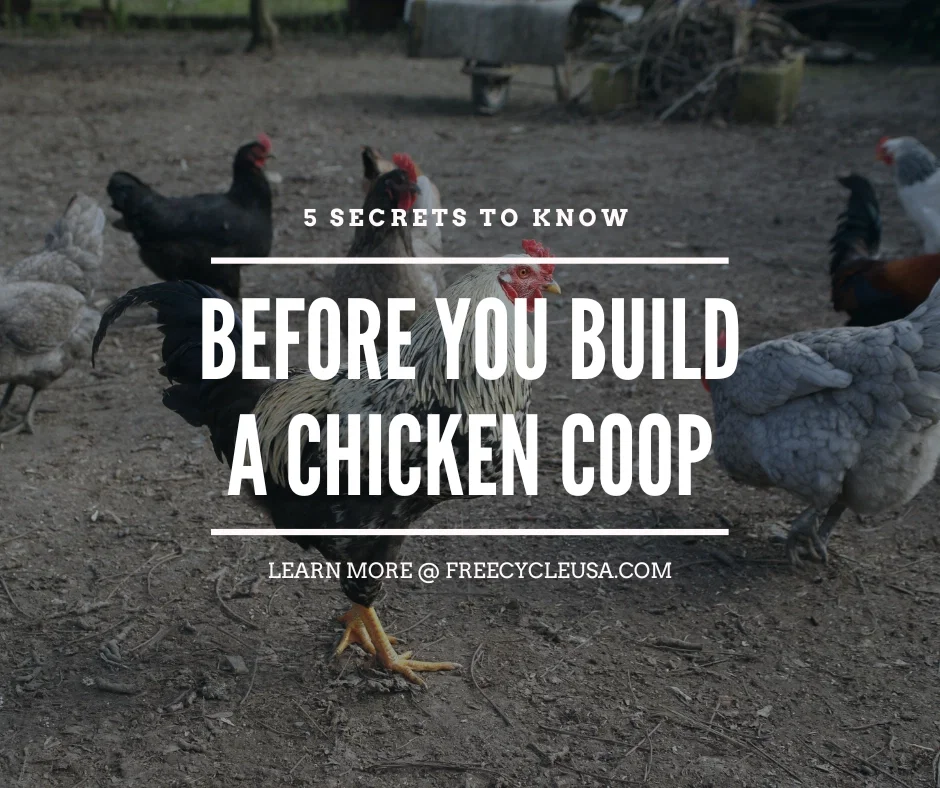
5 Secrets To Know Before You Build A Chicken Coop

Just because you want to build a chicken coop at home, it doesn’t mean that it can’t be attractive and stylish. All it takes is a bit of creative thought, and perhaps some good-quality blueprints. This article provides some pre-construction information on homemade chicken coops.


Chicken Coop Plans
Chicken Coop Plans – Adobe


The 5 Pre-Construction Essentials

Before you get into any DIY chicken coop job, you need to think about a few things. It’s essential to take a systematic approach, as you don’t want to make any mistakes that can cause significant problems later on.

1) Work out how big of a coop you require. Depending on the breed of chicken that you’re going to keep, a single bird requires about 4 square feet to maintain good health. When chickens get trapped in small places, they may get stressed and stop laying eggs. Choose between a small/portable coop, a mid-sized box coop, or a large, premium-style coop with a chicken run.

2) Decide on a position for your coop. If you want to build only a small/portable coop, this won’t matter too much, but for larger, non-movable coops it will. Ensure that your coop position makes the most of the morning sun. Chickens use it to tell the time and may get into irregular laying patterns if not positioned correctly.

3) Work out what the best flooring material is for your coop. Depending on weather conditions, you might like to use sawdust, sand, or straw. Each has its advantages and disadvantages, and it pays to do some research before you decide on one or another.

4) Determine what kind of predators lurk in your location. Foxes, snakes, and wolves are just a few creatures that like to attack and devour defenseless chickens. Install adequate security protection into your coop to prevent attacks from these types of predators.

5) When you’ve built your coop, make sure that there is at least some vegetation inside. Chickens living in purely artificial surroundings are not happy. A few vines here and there should be adequate.

If you’re ready to build a chicken coop with style, check out this Building A Chicken Coop website now.

Article Source

Last Minute Fall Garden Ideas
GardenGardening

Last-Minute Fall Garden Ideas

If you’re like most gardeners, you probably consider August to be the tail end of the growing season. The truth